There are more than 500 identified indigenous Georgian grape varieties, 45 of which are used for commercial wine production. The most commonly grown red grapes are Saperavi, Takveri, Shavkapito, Chkhaveri, Ojaleshi, Aleksandrouli, and Aladasturi, while the most common white varieties are Rkatsiteli, Mtsvane, Chinuri, Kisi, Tsitska, and Tsolikouri.
Georgia exports wine to 53 countries.
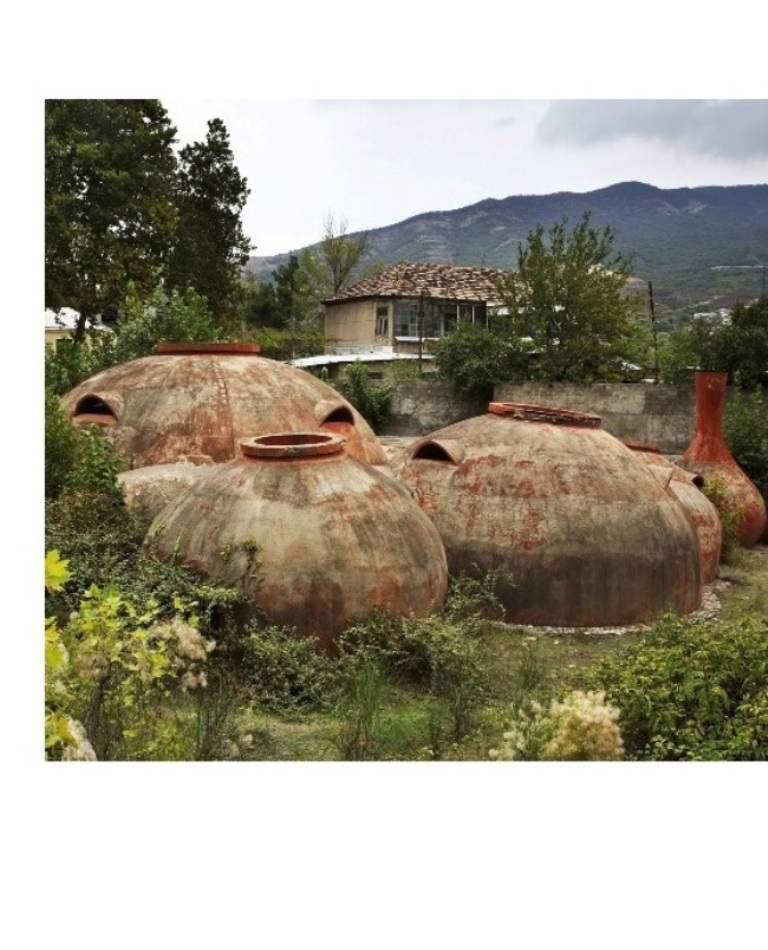
The Georgian wine industry utilizes the same techniques used since approximately 6000 BC. Winemakers fill the qvevri, which range in size from 20 to 10,000 liters, with grape skins, seeds, juice, and the natural yeasts from the grapes. Everything comes together to ferment and create wine. This technique, passed down through generations, is so deeply rooted in Georgian culture that it was added to the UNESCO Intangible Cultural Heritage list in 2013.
The wine is typically fermented in large qvevri and then transferred to smaller vessels to mature. This is similar to wine fermented in large stainless steel tanks and then aged in oak barrels.
While many qvevri used today have been in service for many decades, there are still artisans who hand-shape the vessels from local clay and then dry them in giant wood-fired kilns. As demand for natural and orange wine grows worldwide, the same type of qvevri that cost around 100 euros about 15 years ago now reaches more than 1,000 euros. Wineries can wait up to two years for a qvevri.
There are minor differences between the qvevri made in the east and the west of the country. Those made in the east have wide necks, while those from the west have narrower openings. The composition of the clay also varies from east to west. Eastern vessels are redder, whereas qvevri made from western clay have more of a yellowish tint.
For most winery visitors, this will not be obvious because most of the vessels are buried beneath the wineries, with only the necks rising above the floor. This maintains a constant temperature during fermentation, mitigating the need for temperature control, which is often essential for stainless steel tanks.
Georgian winemakers clean and recondition their qvevri between uses. Thus, naturally occurring yeasts from the grape skins trigger fermentation, and the tannins present in the grape seeds and skins prevent spoilage. The egg-like shape of the qvevri causes the yeast and sediment to fall to the bottom, while the wine circulates in the more spacious middle section.
During fermentation, the qvevri are loosely covered with glass discs to allow carbon dioxide to escape. During further aging, however, the necks are sealed with beeswax to prevent oxidation.
The processes of pressing whole grapes, including stems, and longer skin contact contribute to a fuller texture on the palate. Aging in clay without filtration before bottling can also impart a fine, gritty mouthfeel.
White wines fermented and subsequently aged on grape skins will have a darker color, ranging from deep straw and medium gold to amber or even orange. The wines may be cloudy, which in a "more modern" production method might be considered a sign of a potential defect, but in natural wine, it is to be expected.
Many of Georgia's white grape varieties produce aromatic wines, but the bouquet and flavor profile can be much more complex due to the winemaking process. The aroma will vary, but notes of peach, apricot, flint, leather, smoke, roasted nuts, and roasted meat can be expected.
These notes can also be found on the palate, on top of bright fruit flavors like grapefruit, lemon, and green apple. Some of the same aromatic notes can also be found in red wines, backed by the taste of tart fruits like cranberries and pomegranate, or deeper notes of blackcurrant and elderberry.
Ultimately, there is nothing left to do but suggest that you taste some Georgian wine and judge for yourself.
Taste the authentic history and explore our complete selection of Georgian qvevri wines here.